- About Us
ABOUT CHILDFUND VIETNAM
About Childfund VietnamLearn about ChildFund Vietnam
THE WAY WE WORK
The way we workOur program approach and impact
WHERE WE WORK
Where we workAreas you are supporting
WORK WITH US
Work with usCareers and volunteering
- Resources
MEDIA & NEWS
Media & NewsLatest News & Media inquiries
PUBLICATIONS & REPORTS
Publications & ReportsAnnual Reports and Publications
STORIES
StoriesStories from the field
Bringing Digital Learning to Remote Classrooms
In a remote lower secondary school in Thai Nguyen Province, teacher Mong Van Dai has spent nearly ten years teaching…
A Mother’s Journey to Nourishing Her Child
Before joining ChildFund Vietnam’s project in Ngan Son district, Bac Kan province, Bui Thi Dieu Linh, a young mother, often…
From Shy to Confident – Linh’s Journey of Growth with the “SEL Squad”
“Every day after school, I would just go straight home. I rarely joined any extracurricular activities. I was… - Get Involved





In a remote lower secondary school in Thai Nguyen Province, teacher Mong Van Dai has spent nearly ten years teaching History and Geography, with a particular focus on History. Like many dedicated teachers in rural areas, he was long familiar with the traditional tools of teaching: chalk, blackboards, handwritten lesson plans, and carefully prepared lectures.
“For many years, my lessons were mainly based on textbooks, chalk, blackboards, and the stories I prepared for my students,” teacher Dai shared. “I tried to make History meaningful by telling them about heroic struggles, dynasties, uprisings, and historical figures who shaped Viet Nam.”
Yet, over time, he began to notice a concern in his students’ learning attitudes. Many students remained passive during lessons. Some copied notes mechanically, memorised facts only to prepare for tests, and saw History as difficult, lengthy, and dry.
A turning point came when teacher Dai and his colleagues participated in ChildFund’s “Empowering Digital Learning for All” project, which supports digital transformation in teaching and learning. Through the project, teachers received training and were introduced to digital learning platforms and tools such as mozaBook, learning management systems, e-learning applications, OLM, and other digital resources for designing lessons and creating interactive classroom activities.
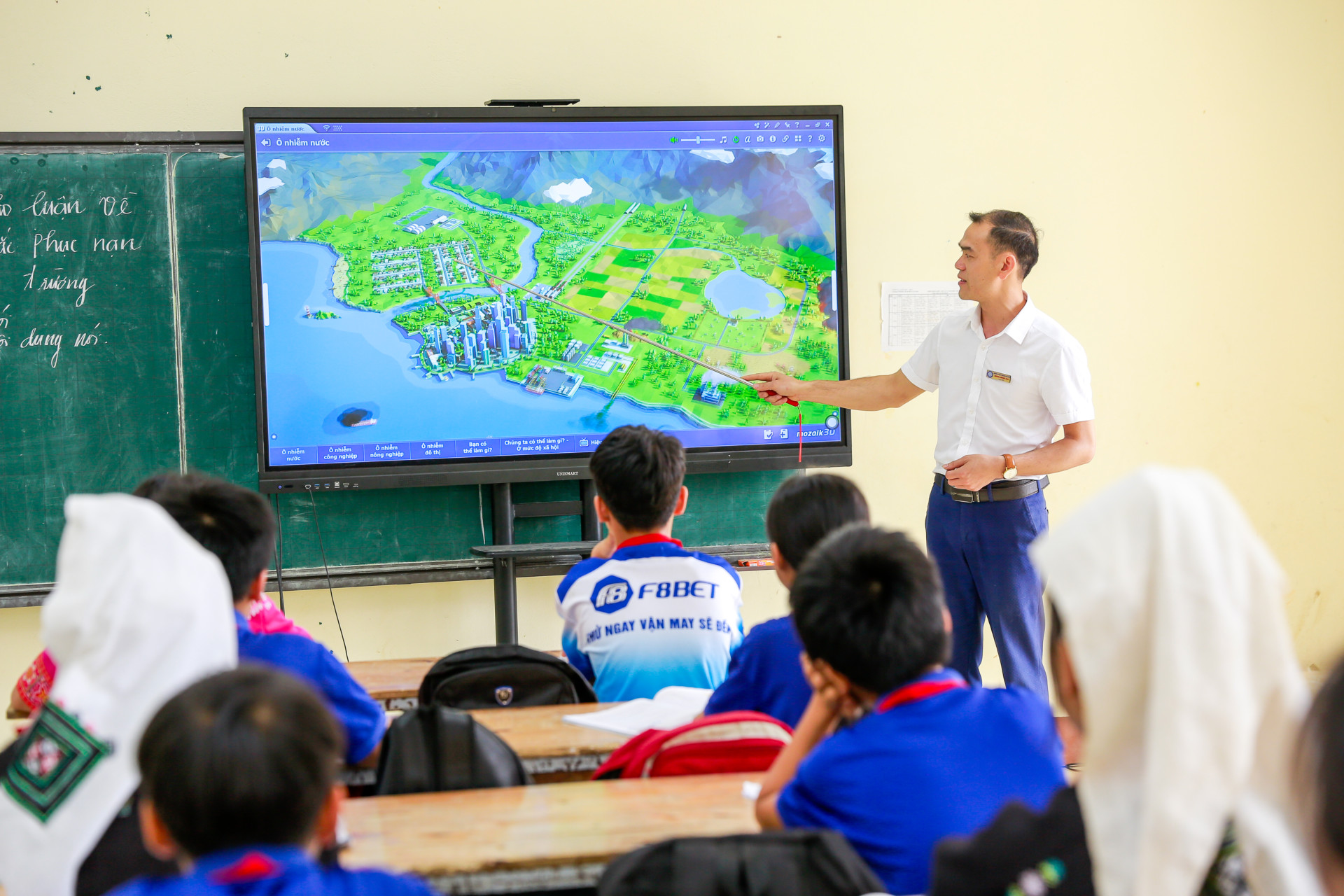
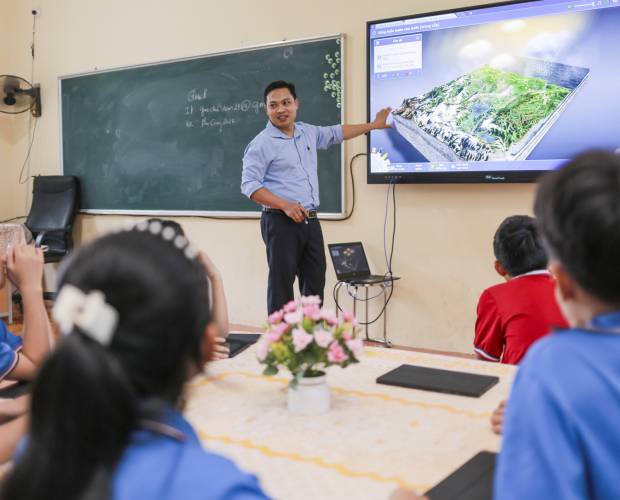
Teacher Dai using mozaBook on the interactive screen to teach History lessons
“At first, I was confused,” teacher Dai recalled. “There were tools I had never used before, and not every attempt was successful. But I told myself that if I wanted my students to change the way they learned, I also had to change the way I taught.”
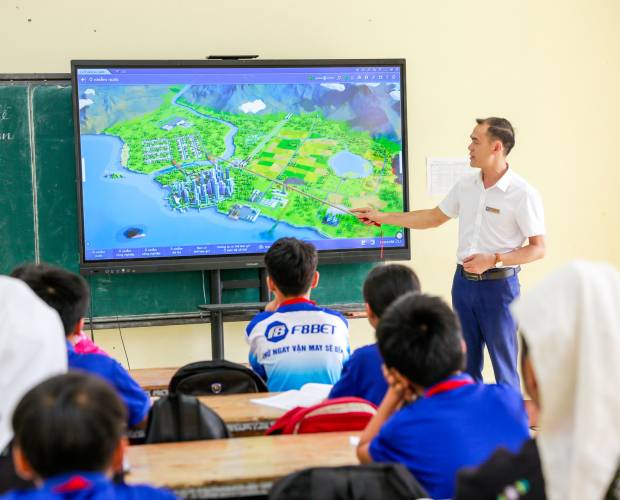
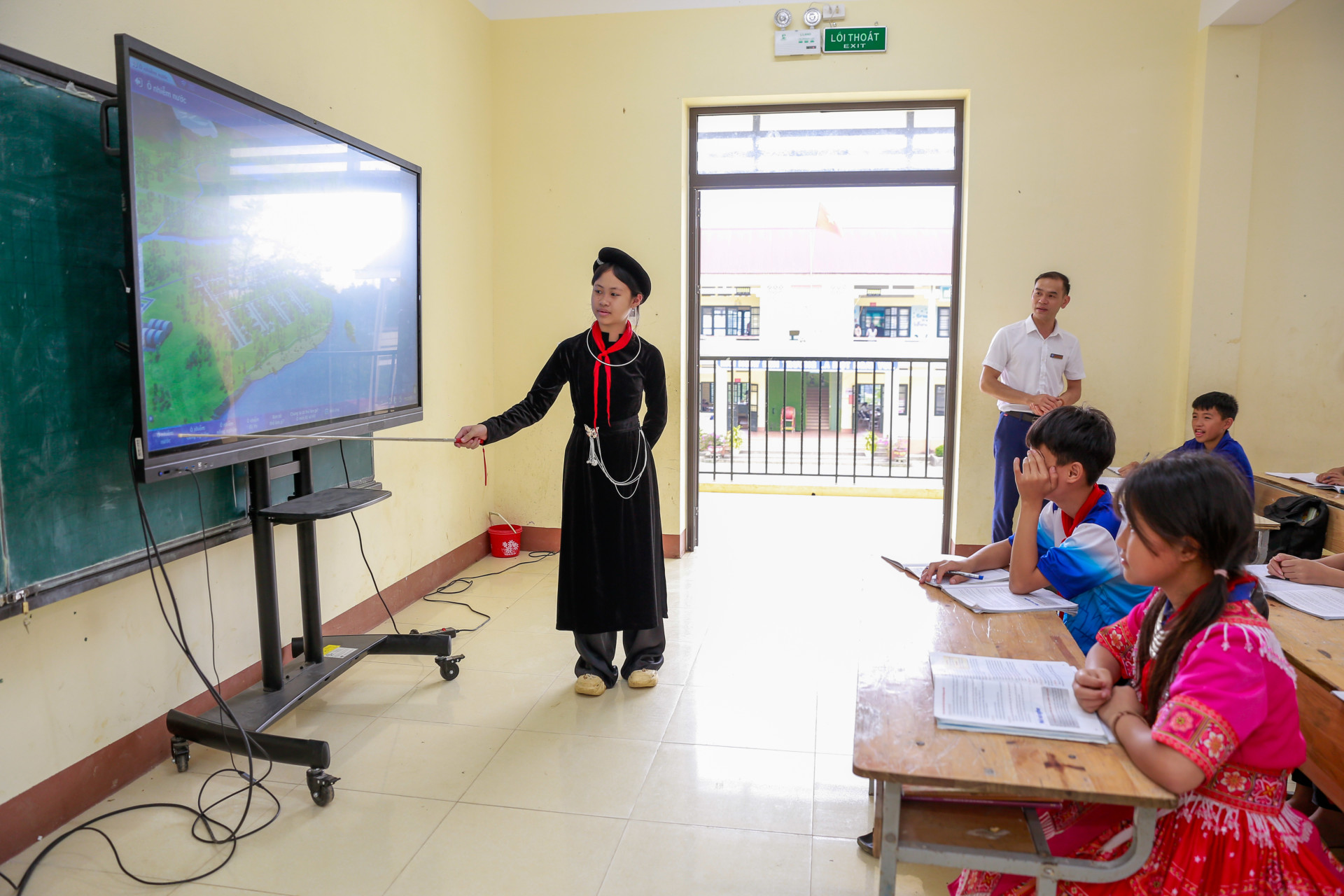
One of the most memorable moments for teacher Dai was his first History lesson using mozaBook. On the screen, historical battles were presented through vivid images, animated maps, and clear timelines. Students were especially excited to explore 3D visuals and interact directly with digital learning materials. They answered questions through games such as “Who Wants to Be a Millionaire?”, lucky wheels, and crossword puzzles. They joined group discussions and role-played historical characters through digital activities.
The atmosphere in the classroom changed. Students raised their hands more often, asked questions with curiosity, and participated with visible excitement. History was no longer limited to reading and copying. It became a subject of exploration, discussion, imagination, and connection.
“This change did not only happen in the classroom. It also changed my own thinking as a teacher,” he said. “I realised that teachers in the digital age need to keep learning, innovating, and daring to step out of their comfort zone. Digital transformation has brought new energy to teaching and helped me rediscover my passion for the profession.”
By the end of the semester, according to teacher Dai, students’ learning results had improved noticeably. More importantly, students became more interested in History, more active in class, and more confident in learning.
“The most valuable result for me was not only better scores,” teacher Dai said. “It was seeing students become more confident, more active, and more interested in History.”
One student shared: “Before, I was afraid of studying History. But now, every lesson is interesting. I feel as if I am living inside history.”
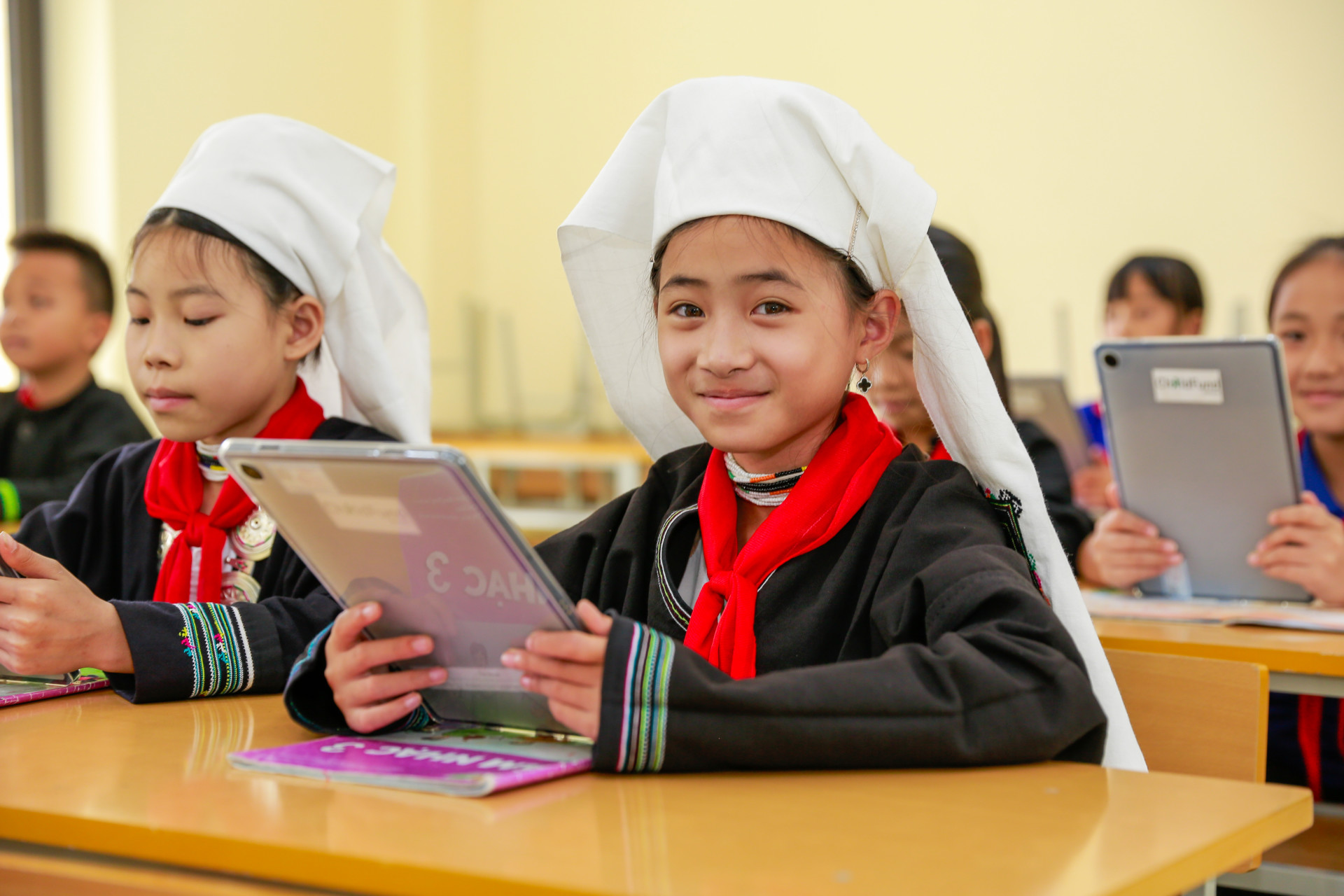
Through the “Empowering Digital Learning for All” project, teacher Mong Van Dai’s experience shows how digital learning can bring new life to classrooms in remote areas. With the right support, teachers can build their confidence, improve their teaching practices, and create more inclusive, engaging, and meaningful learning opportunities for all students.
For teacher Dai, digital transformation has opened a new door—not only to modern teaching methods, but also to renewed passion, creativity, and hope for the next generation of learners in Thai Nguyen Province.